
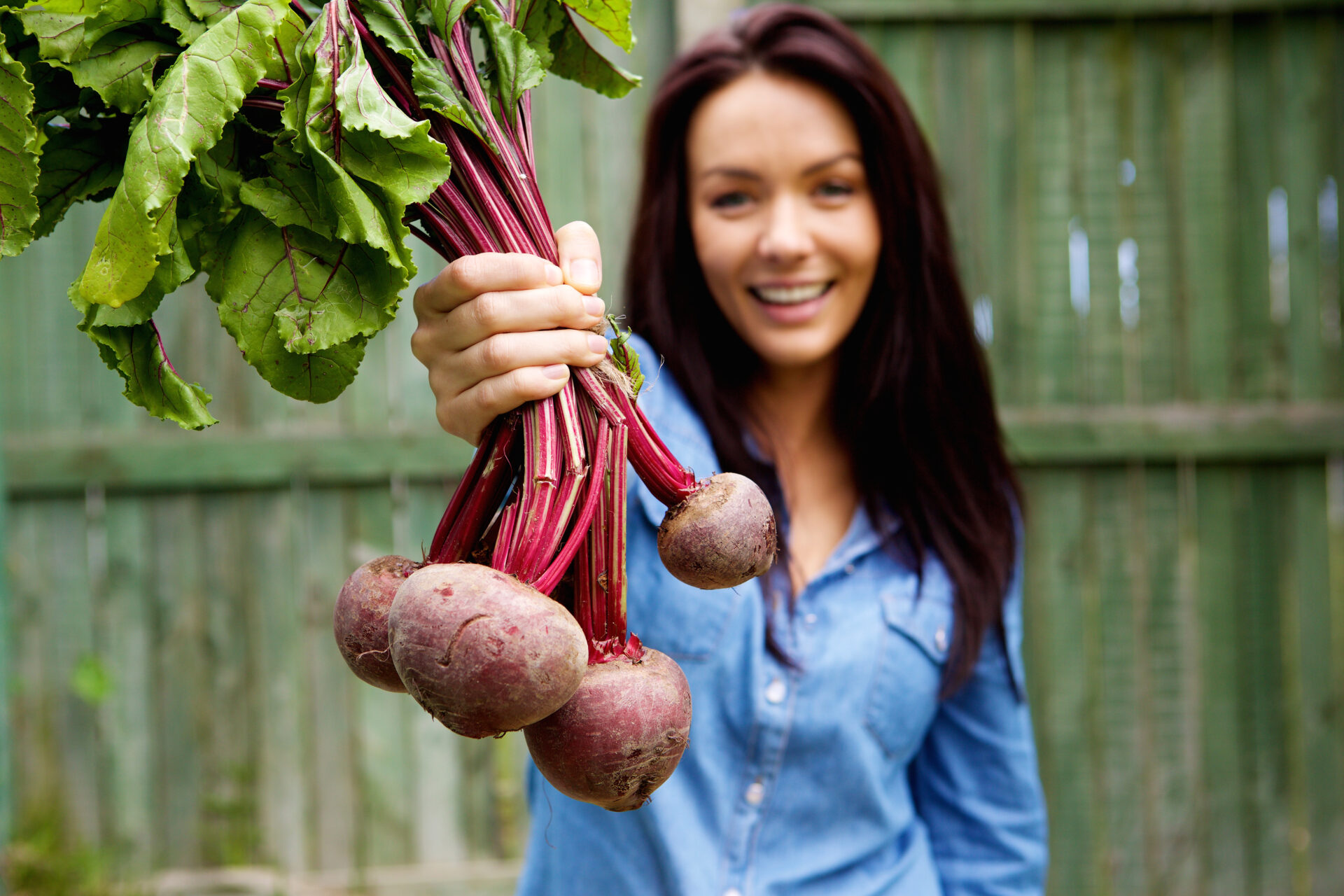
Beets rarely get the attention they deserve. They sit quietly in the produce aisle—dark and earthy, slightly misunderstood—easy to overlook beside flashier superfoods with better marketing. Yet when you trace the science behind this root vegetable, and follow it all the way to the agricultural heartland of the Peruvian Andes. At high altitudes, where pure water and intense sunlight shape the soil, you begin to understand that beets are doing something rather extraordinary for the body. Not in the vague, wellness-influencer sense. In a measurable, physiological, increasingly well-documented sense.
Aging, at its core, is not simply about gray hair or slowing reflexes. Biologically, it is driven by a cascade of processes: oxidative stress accumulating at the cellular level, chronic low-grade inflammation quietly degrading tissues and organs, declining mitochondrial efficiency, reduced blood flow to the brain and extremities, and gradual cognitive changes that often go unnoticed until they become difficult to ignore. Beets — specifically their unique compounds, their dietary nitrates, and even their often-discarded leaves and stalks — engage with several of these processes in ways that are both scientifically grounded and practically accessible. This is not a case of overclaiming the powers of a single food. It is a case of paying closer attention to what was already in front of us.
While producing a segment for BEEWELLNEWS in Peru’s Mantaro Valley — one of the most fertile agricultural regions in the Andes, where crops grow in rich high-altitude soil and traditional plant knowledge has been cultivated across generations — Beewellnews had the chance to chat with Isabell Cáceres, an ethnobotanical specialist whose work bridges indigenous plant traditions and contemporary nutritional science. We were talking about beets, and she said something that stayed with me:
“Most people eat the root and throw everything else away. But the leaves and stalks are where so much of the nutritional value lives.”
It is the kind of observation that feels obvious once you hear it, and yet most of us have never acted on it. We will come back to that. First, the root itself — and what happens inside the body when you eat it consistently.
Betalains and oxidative stress: your first line of defense
The deep, saturated crimson of a freshly cut beet comes from compounds called “betalains”—pigments that are unique to a small family of plants and happen to be among the more potent antioxidants found in any common food. These molecules work by neutralizing free radicals: unstable compounds that accumulate in the body through normal metabolism, environmental exposure, and the passage of time, and that gradually damage cells, proteins, and DNA when left unchecked.
Oxidative stress — the state of having more free radicals than the body can neutralize — is one of the central mechanisms behind biological aging. It is implicated in the development of cardiovascular disease, neurodegenerative conditions, and metabolic dysfunction. Research cited in sources including Medical News Today, drawing on peer-reviewed studies, links regular consumption of betalain-rich foods to reduced markers of oxidative damage and lower risk of heart disease, certain cancers, and type 2 diabetes.
In aging terms, this matters because the accumulation of oxidative damage over decades is not an inevitability to be passively accepted — it is a process that diet can meaningfully influence. Fewer free radicals going unchecked means slower biological deterioration at the cellular level. That is not a minor claim, and beets are not the only food that supports this process, but they are among the more accessible and consistently studied ones.
Inflammation: the quiet accelerant
If oxidative stress is aging’s spark, chronic inflammation is the fuel that keeps it burning. Researchers sometimes use the term “inflammaging” to describe the persistent, low-grade inflammatory state that characterizes biological aging — a background hum of immune activation that gradually degrades tissues, disrupts hormonal signaling, and accelerates the decline of nearly every organ system in the body.
Studies referenced in the British Journal of Nutrition suggest that beets — whether consumed whole, cooked, or as juice — have meaningful anti-inflammatory effects. The mechanisms involve their betalains, their polyphenols, and the nitric oxide pathways that dietary nitrates activate. These are not isolated or redundant pathways; they reinforce each other, creating a cumulative anti-inflammatory effect that is greater than any single compound acting alone.
The downstream benefits of reduced inflammation are broad and interconnected. Joint health improves when inflammatory markers decrease. Cardiovascular function is better supported. The hormonal disruptions that accompany chronic inflammation — affecting thyroid, cortisol, and reproductive hormones — are moderated. Brain clarity tends to improve. And the gradual, systemic tissue damage that defines “aging faster than necessary” is slowed. These are not separate benefits you tick off a list; they are expressions of a single, underlying shift in the body’s inflammatory state.
Nitric oxide and the circulation question
This is where beets particularly distinguish themselves from other anti-inflammatory, antioxidant-rich foods — and where the science becomes especially compelling.
Beets are exceptionally rich in dietary nitrates, which the body converts, through a two-step process involving oral bacteria and stomach acid, into nitric oxide. Nitric oxide is a signaling molecule that relaxes the smooth muscle lining the walls of blood vessels, causing them to dilate. The result is improved circulation, lower blood pressure, and more efficient oxygen and nutrient delivery throughout the body. Think of it as a natural, food-derived vasodilator—one that has been studied in clinical contexts as well as nutritional ones.
The practical implications are significant. Better circulation means more oxygen reaching the brain. It means more efficient delivery of glucose, fatty acids, and micronutrients to cells that are working to repair and maintain themselves. In the science of Ayurveda, it is translated as the Pitta energy acting on balancing metabolic reactions in the body aftecting the optimization of the other doshic energies. It means the cardiovascular system — the network of vessels, capillaries, and chambers whose gradual stiffening and narrowing is one of the most reliable signs of aging — is under less mechanical strain. For physical performance, the evidence is also robust: beetroot supplementation has been shown in multiple studies to improve endurance, reduce the oxygen cost of exercise, and delay fatigue, which is why it is commonly used by competitive athletes. These are precisely the systems that tend to degrade earliest and most noticeably with age. Supporting them through diet is one of the more straightforward things a person can do.
The brain connection: blood flow, mitochondria, and cognitive longevity
Brain health is perhaps the most consequential frontier in aging research, and it is where the nitric oxide story becomes most interesting. Emerging research — some of it from imaging studies that can directly observe cerebral blood flow — suggests that dietary nitrates may increase circulation specifically to regions of the brain associated with executive function, working memory, and decision-making. These are the areas most vulnerable to age-related decline, and they are also the areas most dependent on consistent, adequate blood supply.
Some research groups have begun exploring beetroot supplementation as a potential dietary strategy against mild cognitive impairment, with early results suggesting that regular consumption can improve performance on cognitive tests in older adults. The sample sizes are still modest and the field is young, but the mechanistic logic is sound: if better blood flow supports these brain regions, and beets reliably improve blood flow, then the connection is more than theoretical. Please see sources at the end of this article.
There is also the mitochondrial dimension, another example of the Pitta energy at the cellular level. Nitric oxide has been shown to improve mitochondrial efficiency — the capacity of cells’ energy-producing structures to generate ATP from the same amount of fuel. Mitochondrial decline is a well-established feature of aging; cells that cannot produce energy efficiently accumulate damage more quickly, function less well, and are more vulnerable to stress. Anything that supports mitochondrial function is, in the most direct sense, supporting healthy aging at the cellular level.
Taken together — improved cerebral blood flow, better cognitive performance, enhanced mitochondrial efficiency — the case for beets as a brain-supportive food is not wishful thinking. It is an emerging area of legitimate scientific interest.
Watch the BEEWELLNEWS segment from Peru’s Mantaro Valley. https://youtu.be/4UoIXdlAmHA?si=FalKvDBF6doAHU12
In this episode, ethnobotanist Isabell Cáceres walks us through the beet in its entirety — root, stalks, and leaves — and explains why the parts we discard may matter most. Watch on the BEEWELLNEWS YouTube channel. →https://youtu.be/4UoIXdlAmHA?si=FalKvDBF6doAHU12
Women’s health and the midlife transition
It would be a disservice to write about beets and aging without addressing something that affects half the population directly: the physiological shifts that accompany perimenopause and menopause. This stage of life involves real, measurable changes in cardiovascular risk, energy metabolism, bone density, cognitive function, and mood — changes that deserve honest nutritional discussion, not vague reassurances.
Beetroot juice has drawn specific research attention as a nutritional support during this transition. The reasoning is mechanistic rather than anecdotal: the improvements in blood flow, cardiovascular function, and cellular energy that beets support are directly relevant to the physiological shifts women experience during perimenopause and beyond. Estrogen’s protective role in vascular health declines during this period; dietary strategies that support nitric oxide production and blood vessel elasticity become correspondingly more important.
Menopause marks the transition of the pitta phase of life to the vata phase of life which is vulnerable to the drying and hardening aspects of the doshic energy of the latter. Energy fluctuations, which are among the most commonly reported and disruptive symptoms during this transition, may also benefit from the mitochondrial support that dietary nitrates provide. This is an area where the research is still developing, but the mechanistic rationale is well grounded. They are food — accessible, affordable, and broadly safe for most people.
Ayurveda and the seasonal dimension
One of the things BEEWELLNEWS returns to consistently is the conversation between ancient food wisdom and modern science — not to romanticize tradition, but because that conversation is often more illuminating than either perspective alone.
In Ayurvedic medicine, beets are considered grounding and nourishing — qualities associated with what the tradition calls their heaviness, moisture, and earthy nature. They are particularly recommended during Vata season: the cold, dry months from roughly October through March in the Northern Hemisphere, when the qualities of dryness, lightness, and instability tend to predominate. Vata imbalance, in this framework, manifests as anxiety, restlessness, scattered thinking, and mental fatigue — states that are more common in winter and that many people recognize without having a name for them.
What is striking is that the Ayurvedic recommendation to eat grounding, moisture-rich foods during this period — beets among them — maps quite closely onto what modern research is showing about nitric oxide and brain function. Better cerebral blood flow supports the kind of stable, focused cognition that feels elusive during periods of stress or cold-weather fatigue. The nervous system benefits from improved circulation. The prefrontal cortex — responsible for executive function, emotional regulation, and sustained attention — is better supplied with the oxygen and glucose it needs to operate well.
Ancient wisdom and neuroscience, arriving at the same destination from very different directions. That convergence is worth taking seriously.
The part most people throw away

Back to Isabell Cáceres and what she observed in the Mantaro Valley. Most people who cook with beets use the root — roasting it, blending it, juicing it — and discard the stalks and greens without a second thought. This is a significant nutritional oversight.
Beet greens are among the more nutrient-dense leafy vegetables available. They contain substantial fiber, which supports gut microbiome health, blood sugar regulation, and satiety. They are rich in vitamin A, important for immune function, skin integrity, and vision. Vitamin C — present in meaningful quantities in both the leaves and stalks — supports collagen synthesis, immune defense, and antioxidant activity. Vitamin K, often under-discussed but critical for bone density and cardiovascular health, is abundant in the greens. And the polyphenol content of beet leaves adds another layer of anti-inflammatory support on top of what the root itself provides.
Ethnobotanical traditions in regions like the Mantaro Valley — where nothing edible is wasted by habit or necessity — have always used the whole plant. Modern nutritional science is catching up to why that instinct was correct.
Practical notes: how to use the whole beet
Sauté beet stalks in olive oil with garlic — they cook similarly to chard stems and pair well with almost anything. Add the chopped greens to soups, stews, or grain bowls in the last few minutes of cooking. Blend raw or roasted beet root into smoothies for a mild, earthy sweetness. Roast beets whole for a concentrated flavor and a simple side dish. For targeted cardiovascular or cognitive effects, most studies have used approximately 8–9 ounces of beetroot juice daily, or the equivalent of 1 to 1.5 cups of cooked beet. Consistency, as with most dietary interventions, matters more than any single large serving.
A realistic perspective
It would be easy to write a piece like this and leave the impression that beets are a solution — a single food that arrests aging, sharpens the mind, and restores what time takes. That would be both dishonest and counterproductive.
Beets are a genuinely functional food. The science supporting their effects on oxidative stress, inflammation, circulation, blood pressure, and cognitive function is real, growing, and mechanistically coherent. But they work best — as all functional foods do — as part of a broader context: a varied diet, regular physical movement, adequate sleep, and a nervous system that is not chronically overwhelmed by stress. A diet built around beets but lacking in other respects will not produce the results the research describes. A diet that includes beets as one considered, consistent element of a thoughtful approach to eating — that is where the benefit lies.
The goal, ultimately, is to work with the body’s own systems rather than against them. To give the cardiovascular system what it needs to stay elastic. To support the brain’s blood supply before cognitive decline becomes a concern rather than after. To use the whole plant — root, greens, and stalks — rather than discarding the parts that have fed communities for centuries.
That is not a complicated philosophy. It is just a more attentive one.
BEEWELLNEWS · Verified Sources · Beets & Aging Article
Betalains, antioxidants & oxidative stress
1.Betalains: A Narrative Review on Pharmacological Mechanisms Supporting the Nutraceutical Potential Towards Health Benefits
MDPI Foods, December 2024 — Peer-reviewed
https://www.mdpi.com/2304-8158/13/23/3909
2.Betalains: A New Class of Dietary Cationized Antioxidants
Journal of Agricultural and Food Chemistry, ACS Publications — Peer-reviewed
https://pubs.acs.org/doi/10.1021/jf010456f
3.Betalains Protect Various Body Organs Through Antioxidant and Anti-Inflammatory Pathways
Food Science and Human Wellness, 2024 — Peer-reviewed
https://www.sciopen.com/article/10.26599/FSHW.2022.9250093
4.Beetroot as a Functional Food with Huge Health Benefits: Antioxidant, Antitumor, Physical Function, and Chronic Metabolomics Activity
PMC / National Institutes of Health — Peer-reviewed
https://pmc.ncbi.nlm.nih.gov/articles/PMC8565237
5.Betanin as a Multipath Oxidative Stress and Inflammation Modulator
Critical Reviews in Food Science and Nutrition, Taylor & Francis — Peer-reviewed
https://www.tandfonline.com/doi/full/10.1080/10408398.2020.1822277
Nitric oxide, blood pressure & circulation
6.Inorganic Nitrate and Beetroot Juice Supplementation Reduces Blood Pressure in Adults: A Systematic Review and Meta-Analysis
The Journal of Nutrition, Oxford Academic — Peer-reviewed
https://jn.nutrition.org/article/S0022-3166(22)01204-4/fulltext
7.Nitrate Derived from Beetroot Juice Lowers Blood Pressure in Patients with Arterial Hypertension: A Systematic Review and Meta-Analysis
Frontiers in Nutrition, 2022 — Peer-reviewed
https://www.frontiersin.org/journals/nutrition/articles/10.3389/fnut.2022.823039/full
8.Dietary Nitrate Provides Sustained Blood Pressure Lowering in Hypertensive Patients
Hypertension, American Heart Association Journals — Peer-reviewed
https://www.ahajournals.org/doi/10.1161/hypertensionaha.114.04675
9.Dietary Nitrate from Beetroot Juice for Hypertension: A Systematic Review
Biomolecules, MDPI, 2018 — Peer-reviewed
https://www.mdpi.com/2218-273X/8/4/134
Brain health, cerebral blood flow & cognitive aging
10.Beet Root Juice: An Ergogenic Aid for Exercise and the Aging Brain
PMC / National Institutes of Health — Peer-reviewed
https://pmc.ncbi.nlm.nih.gov/articles/PMC5861951
11.Daily Dose of Beet Juice Promotes Brain Health in Older Adults (Wake Forest University / ScienceDaily)
ScienceDaily — Based on peer-reviewed research
https://www.sciencedaily.com/releases/2010/11/101102130957.htm
12.The Neuroprotective Potential of Betalains: A Focused Review
MDPI Plants, March 2025 — Peer-reviewed
https://www.mdpi.com/2223-7747/14/7/994
Women’s health & menopause
13.Daily Beetroot Juice Intake Could Help Protect Heart Health After Menopause
Medical News Today, June 2024 — Reporting on Penn State RCT published in Frontiers in Nutrition
14.Does a Beet a Day Keep Heart Disease Away? (Penn State Study)
ScienceDaily, June 2024 — Based on RCT published in Frontiers in Nutrition
https://www.sciencedaily.com/releases/2024/06/240610140207.htm
Beet greens & stalks nutrition
15.Beet Greens: Nutrition Facts, Benefits, and Concerns
Nutrition Advance — Evidence-based nutritional analysis
16.Beet Greens Nutrition — Vitamins A, C, K and Mineral Profile
Nutrition-and-You.com — USDA-referenced nutritional data